
Older Interiors Stay Intact
Plaster, wood floors, and masonry soak up water and hold it. Sealing the parapet or scupper that lets water in keeps damage from spreading through finishes that cost far more to restore than the roof repair.
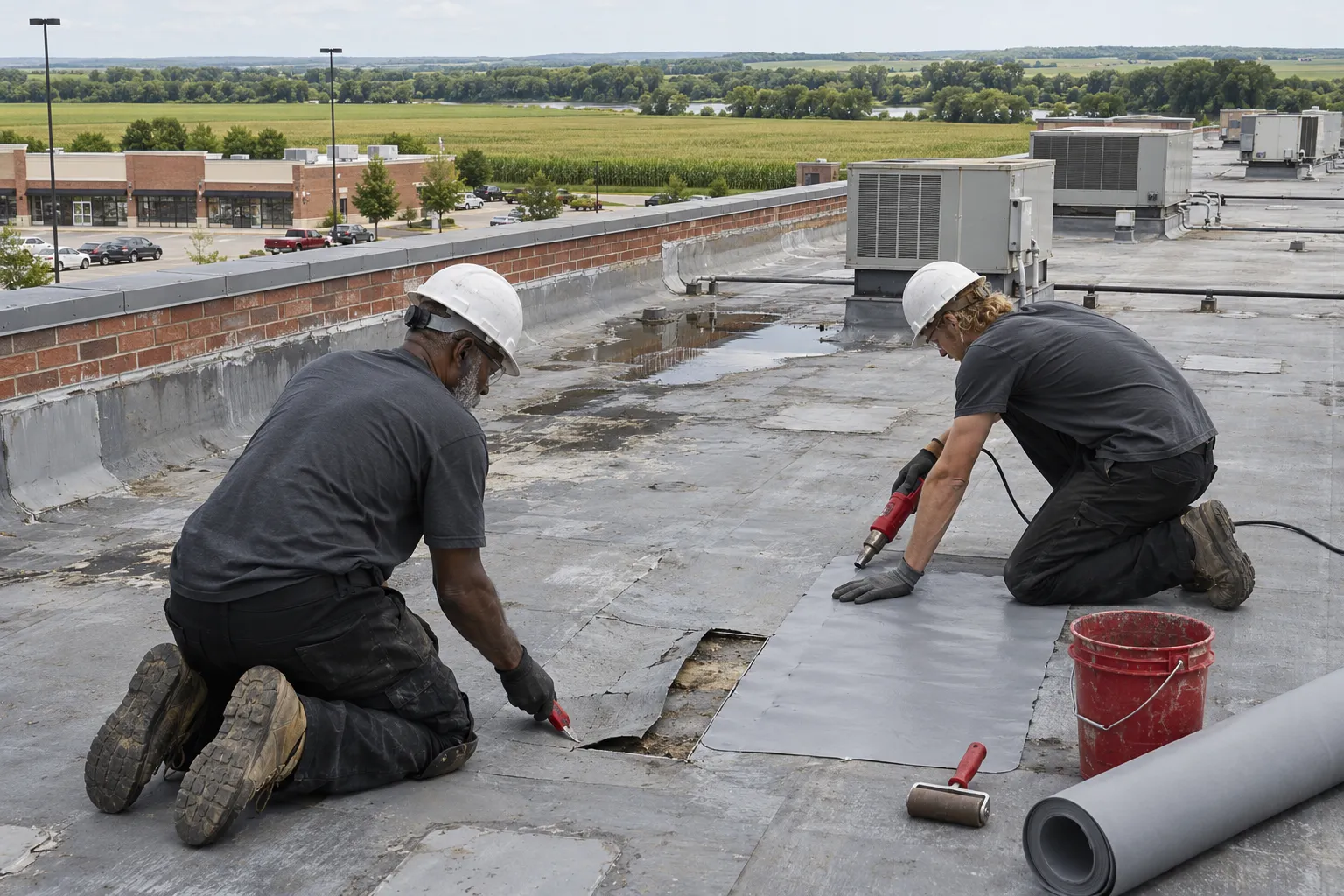
As a Wahoo commercial roof repair contractor, we repair built-up roofs, parapet flashing, and scuppers on older downtown and Main Street buildings.
Wahoo commercial roof repair often starts on a roof that has been patched by several hands over the years.
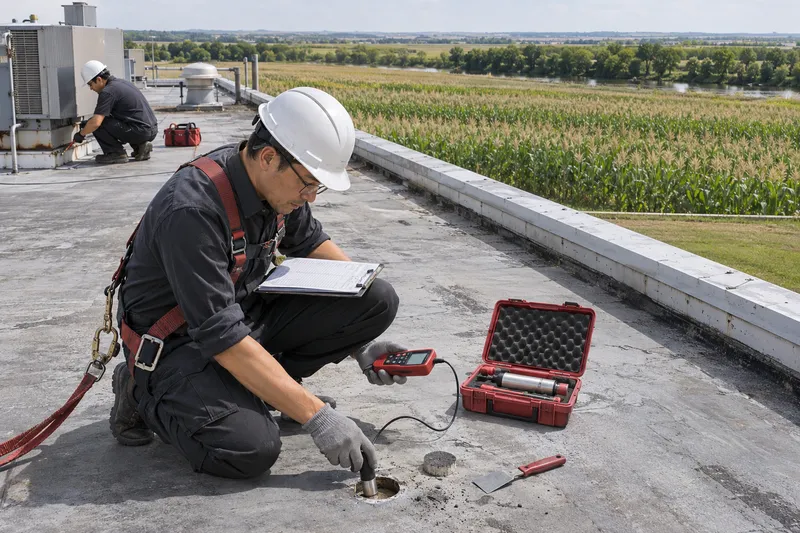
Older storefronts and offices in Wahoo tend to sit under built-up or modified bitumen roofs behind brick parapets. Layers of past patches, coatings, and flashing repairs hide where water gets in, so we cut small cores to read what is under them.
Repairs here focus on the plies, the parapet, and the scuppers that drain through the wall. Tight downtown access means material goes up by hatch or ladder in small loads.
These are the conditions we find most on older low-slope roofs in town.
Soft domes on a built-up roof mark moisture trapped between layers. Cutting them out while small keeps the surface from splitting.
Base flashing on brick parapets dries, cracks, and pulls away, sending water behind the membrane at the wall.
Through-wall scuppers collect leaves and gravel, and water backs up against the parapet until it finds a gap.
Water on older plaster or pressed-tin ceilings spreads fast and can bring finish down. Temporary seals go on first.
Repeated patches stacked in one spot often hide a deeper flashing failure that never got fixed.
Decks on older buildings settle, and ponds form where no drain sits. Fill or a new cricket moves the water.
Older buildings have more to lose from a slow leak, from plaster to brick to stored goods.
Plaster, wood floors, and masonry soak up water and hold it. Sealing the parapet or scupper that lets water in keeps damage from spreading through finishes that cost far more to restore than the roof repair.
Built-up roofs that stay dry keep their plies stuck together, which keeps repairs possible.
Good parapet flashing keeps water out of brick joints that freeze and spall in winter.
Logging what was found under each old patch helps the next owner or tenant plan.
Each repair below is common on older Wahoo buildings, with the sign that a larger job is due.
| Condition | Repair We Make | Larger Job Sign |
|---|---|---|
| Built-up roof blister | Cut out, dry, and patch with compatible plies | Blisters cover much of the roof |
| Cracked parapet flashing | Strip and replace base and counterflashing | Parapet brick is loose or wet through |
| Blocked scupper | Clear, reseal the scupper box, and check the conductor head | The scupper box has rusted out |
| Stacked old patches | Remove the patches and repair the failure under them | Wet insulation runs past the patch |
| Settled low spot | Add fill or a cricket to move water toward a drain | The deck itself is damaged |
Call and tell us where it shows up inside. We look under the old patch for the real failure and fix that instead of adding another layer.
(402) 407-4074Call UsVisits to older Wahoo buildings start with what is inside, then move to the roof.
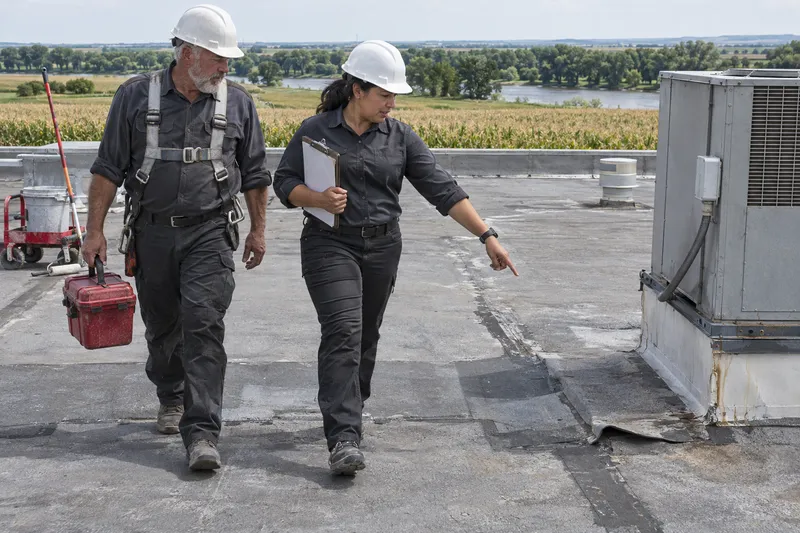
Plaster stains, tin ceiling rust, and wet walls are noted room by room before we head up.
One core shows the layers under the surface and whether the insulation is dry enough to patch over.
Cracked base and counterflashing at the parapet comes off so the wall joint can be rebuilt.
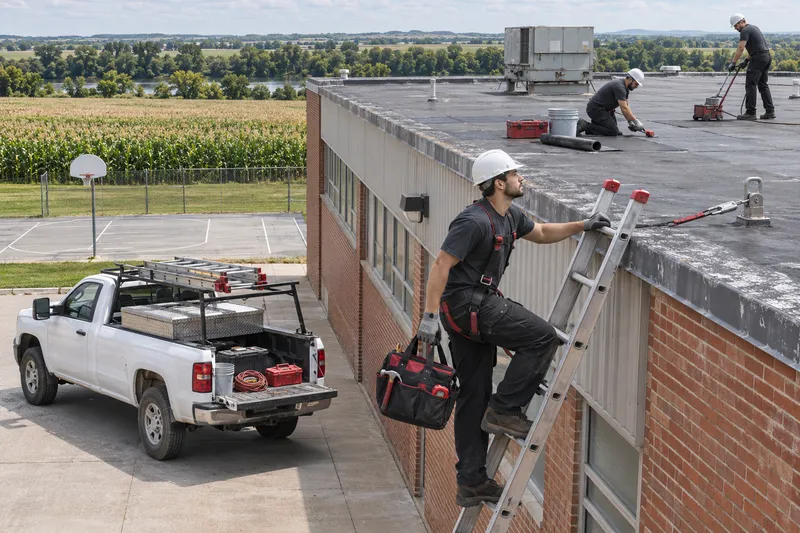
Roofing materials go up by hatch or ladder in small loads to keep sidewalks and alleys clear.
Blisters are patched with compatible plies, scuppers resealed, and new flashing tied into the brick.
Have a building outside Wahoo? We repair commercial roofs in these towns too, and you can call us or send a message about anywhere else.
Answers for owners of older commercial buildings in Wahoo.
Often, yes, when the plies are still stuck together and the insulation is mostly dry. Blisters get cut out, splits patched with compatible materials, and wall flashing resealed. Cracking across the whole surface or wet insulation over wide areas means it is time to plan a replacement.
Most stacked patches cover the symptom and leave the source open. Water enters at a parapet joint or scupper and travels under the plies to the same weak spot. Removing the old patches shows where the water really came from.
Access and layers lead the list. Tight downtown access slows material handling, and roofs with several old layers take more cutting to reach a clean surface. The amount of parapet flashing, the number of scuppers, and any wet insulation found in the core cuts set the rest. A roof walk turns those into a written list of repairs.
Yes. Most repairs happen on the roof with nothing staged inside, and materials go up through a hatch or by ladder in small loads. Odor-heavy steps such as primers and adhesives can be timed before opening hours, and the sidewalk under the work stays open.
Through cracked coping joints, worn mortar at the top of the wall, and base flashing that has pulled away. Water then runs down inside the wall and shows as stains well below the roof line.
When the coping joints are open, yes. Sealing the roof at the base of a parapet while water keeps entering at the top leaves the leak in place.
Tell us about the building and where the water shows up. We will check the plies, parapets, and scuppers and lay out the repair.